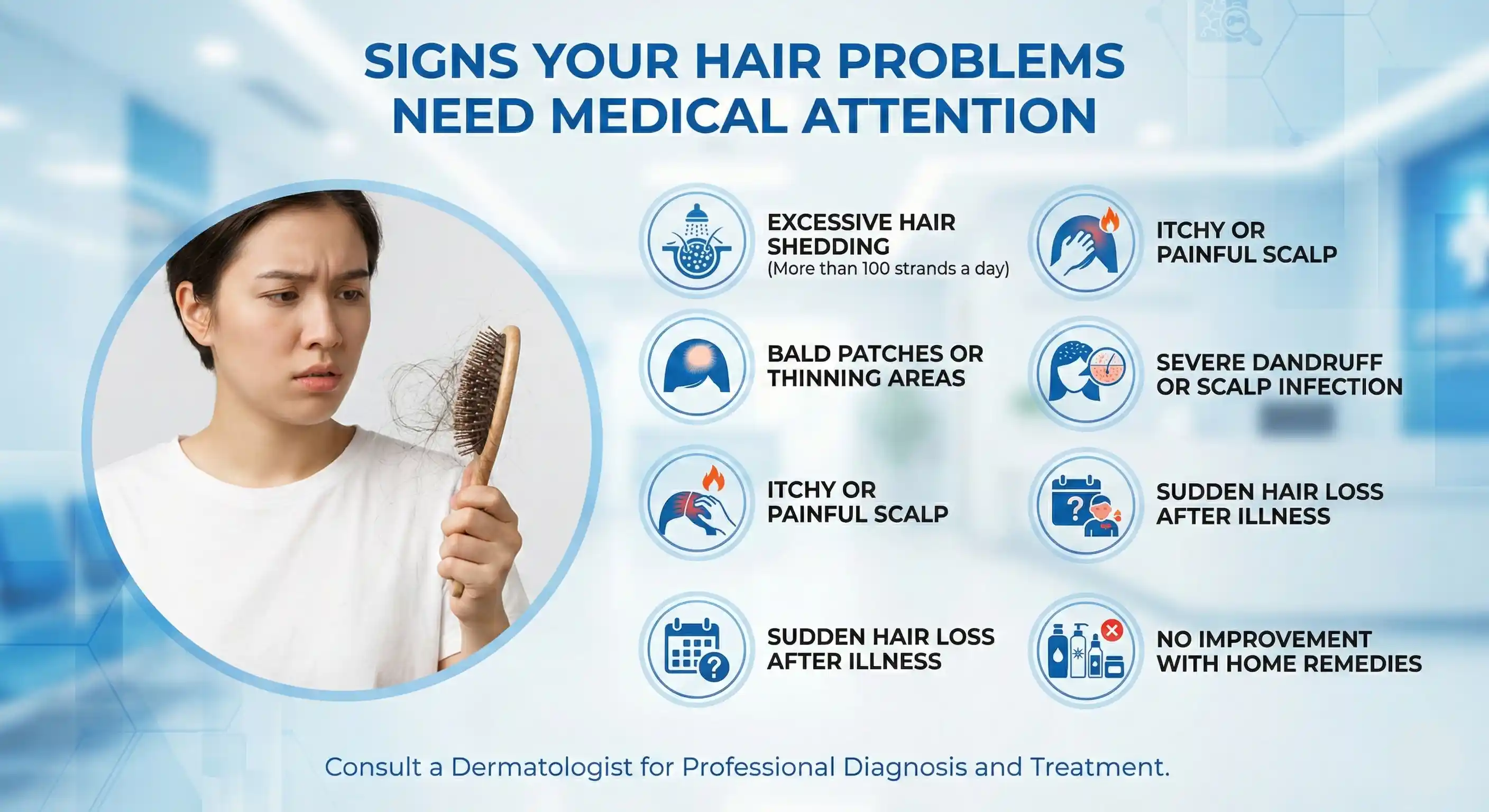
Signs Your Hair Problems Need Medical Attention
Understanding Why Hair Reflects Overall Health
Hair growth follows a structured cycle influenced by blood supply, hormones, oxygen levels, and nutrient availability. Because hair is not essential for survival, the body prioritizes vital organs during stress or illness—often at the expense of hair growth.
This is why hair issues commonly appear during:
- Nutritional deficiencies
- Hormonal imbalances
- Chronic illness
- Autoimmune conditions
- Emotional or physical stress
When hair problems persist, worsen, or appear alongside other symptoms, they are often a reflection of internal imbalance rather than external damage.
1. Hair Loss That Lasts Longer Than Three Months
Temporary hair fall is common during seasonal changes or short periods of stress. However, hair loss that continues for more than three months should not be ignored.
You may need medical attention if:
- Hair shedding does not reduce over time
- Hair fall continues despite lifestyle changes
- You notice thinning across the scalp
Persistent hair loss may be linked to iron deficiency, thyroid disorders, hormonal changes, chronic inflammation, or metabolic issues. Medical evaluation helps identify whether the hair follicles are under long-term stress.
2. Sudden or Rapid Hair Shedding
A noticeable increase in hair fall over a short period can be alarming. This often occurs when a large number of hair follicles shift into the resting phase simultaneously.
Common triggers include:
- High fever or viral infections
- Major surgery or hospitalization
- Sudden weight loss
- Severe emotional stress
While this condition may be reversible, medical assessment is important if shedding is intense or accompanied by fatigue, weakness, or mood changes.
3. Patchy Hair Loss or Bald Spots
Hair loss that appears in small circular patches or distinct bald areas is not normal and usually indicates a medical condition.
Possible causes include:
- Autoimmune hair loss
- Scalp fungal infections
- Inflammatory scalp disorders
Patchy hair loss often progresses unpredictably. Early medical evaluation improves the chances of regrowth and prevents permanent follicle damage.
4. Persistent Scalp Itching, Pain, or Burning Sensation
Occasional itching may result from dryness or product buildup. However, persistent scalp discomfort especially pain or burning—suggests an underlying condition.
Medical attention is recommended if:
- Itching does not improve with basic care
- The scalp feels tender or painful
- Symptoms worsen over time
These signs may be associated with inflammatory scalp conditions, allergic reactions, or infections that require targeted treatment.
5. Redness, Scaling, or Thick Flakes on the Scalp
Visible scalp changes often indicate inflammation or immune-related disorders.
Watch for:
- Thick white or yellowish scales
- Red or inflamed patches
- Flaking that spreads beyond the hairline
Such symptoms may point to chronic scalp conditions that do not resolve with over-the-counter products alone. Proper diagnosis helps prevent hair thinning caused by prolonged inflammation.
6. Hair Thinning Alongside Fatigue or Low Energy
When hair thinning occurs together with persistent tiredness, dizziness, or reduced stamina, it may indicate a systemic health issue.
Common contributing factors include:
- Low iron levels
- Vitamin B12 deficiency
- Thyroid imbalance
- Chronic illness
In these cases, hair treatment alone is ineffective unless the root cause is identified and corrected.
7. Sudden Changes in Hair Texture or Strength
If your hair suddenly becomes:
- Extremely brittle
- Unusually dry
- Weak and prone to breakage
- Slow-growing
…it may reflect internal changes rather than external damage. Hair texture shifts are commonly linked to hormonal changes, nutritional imbalance, or metabolic disorders.
8. Hair Loss with Hormonal or Metabolic Symptoms
Hair problems accompanied by other physical changes often indicate hormonal imbalance.
Seek medical guidance if hair loss occurs with:
- Acne or oily skin
- Unexplained weight changes
- Irregular menstrual cycles
- Increased facial hair in women
These patterns may be associated with endocrine disorders that require medical evaluation rather than cosmetic solutions.
9. Early-Onset Hair Loss with Family History
Genetics influence hair patterns, but early or aggressive hair thinning especially before the mid-20s—deserves medical attention.
A professional assessment helps:
- Distinguish genetic hair loss from medical causes
- Identify contributing nutritional or hormonal factors
- Create an early intervention plan
Addressing hair loss early can significantly slow progression.
10. Hair Loss After Starting New Medications
Certain medications can disrupt the hair growth cycle as a side effect.
Hair changes should be evaluated if they begin after:
- Long-term medication use
- Hormonal treatments
- Immune-modulating drugs
A medical professional can determine whether the hair loss is temporary or requires adjustment in treatment.
11. Scalp Infections or Painful Lesions
Any signs of infection on the scalp should be addressed promptly.
Warning signs include:
- Painful bumps
- Pus-filled lesions
- Swelling or warmth
- Fever with scalp symptoms
Untreated infections can damage hair follicles permanently, leading to irreversible hair loss.
12. Emotional Impact of Hair Problems
Hair plays a significant role in self-image. When hair problems lead to anxiety, stress, or reduced confidence, medical guidance can help address both physical and emotional aspects.
A comprehensive approach often considers:
- Physical health
- Emotional well-being
- Lifestyle factors
When Medical Evaluation Becomes Important
Medical attention helps:
- Identify underlying health issues early
- Prevent long-term follicle damage
- Improve treatment outcomes
- Restore overall hair and scalp health
Ignoring persistent hair problems may delay diagnosis of conditions that affect more than just hair.
Practical Steps Before Seeking Medical Help
Before your consultation, note:
- When hair loss started
- Any recent illness, stress, or weight change
- Medications or supplements you use
- Family history of hair conditions
This information helps professionals assess patterns accurately.
Conclusion
Hair problems are not always superficial concerns. In many cases, they serve as early indicators of internal health issues. Persistent hair loss, scalp discomfort, sudden texture changes, or hair issues accompanied by fatigue or hormonal symptoms should never be ignored.
Understanding these warning signs empowers you to seek timely medical advice, protect your hair follicles, and address potential health concerns early. Healthy hair is often a reflection of a healthy body—and paying attention to these signals is a crucial step toward long-term well-being.
Frequently Asked Questions (FAQs)
1. Is hair fall always a medical issue?
No. Temporary hair fall can occur due to stress or lifestyle changes. Medical attention is needed when hair loss is persistent, severe, or accompanied by other symptoms.
2. How long should I wait before seeing a doctor for hair loss?
If hair loss continues beyond three months or worsens over time, medical evaluation is recommended.
3. Can vitamin deficiencies really affect hair health?
Yes. Iron, vitamin B12, vitamin D, and protein deficiencies commonly affect hair growth and strength.
4. Are scalp conditions permanent?
Most scalp conditions are manageable with early diagnosis and appropriate care. Delayed treatment can increase the risk of permanent damage.
5. Can stress-related hair loss become long-term?
Stress-related hair loss is often reversible, but chronic stress without intervention can prolong or worsen hair problems.

.webp)