
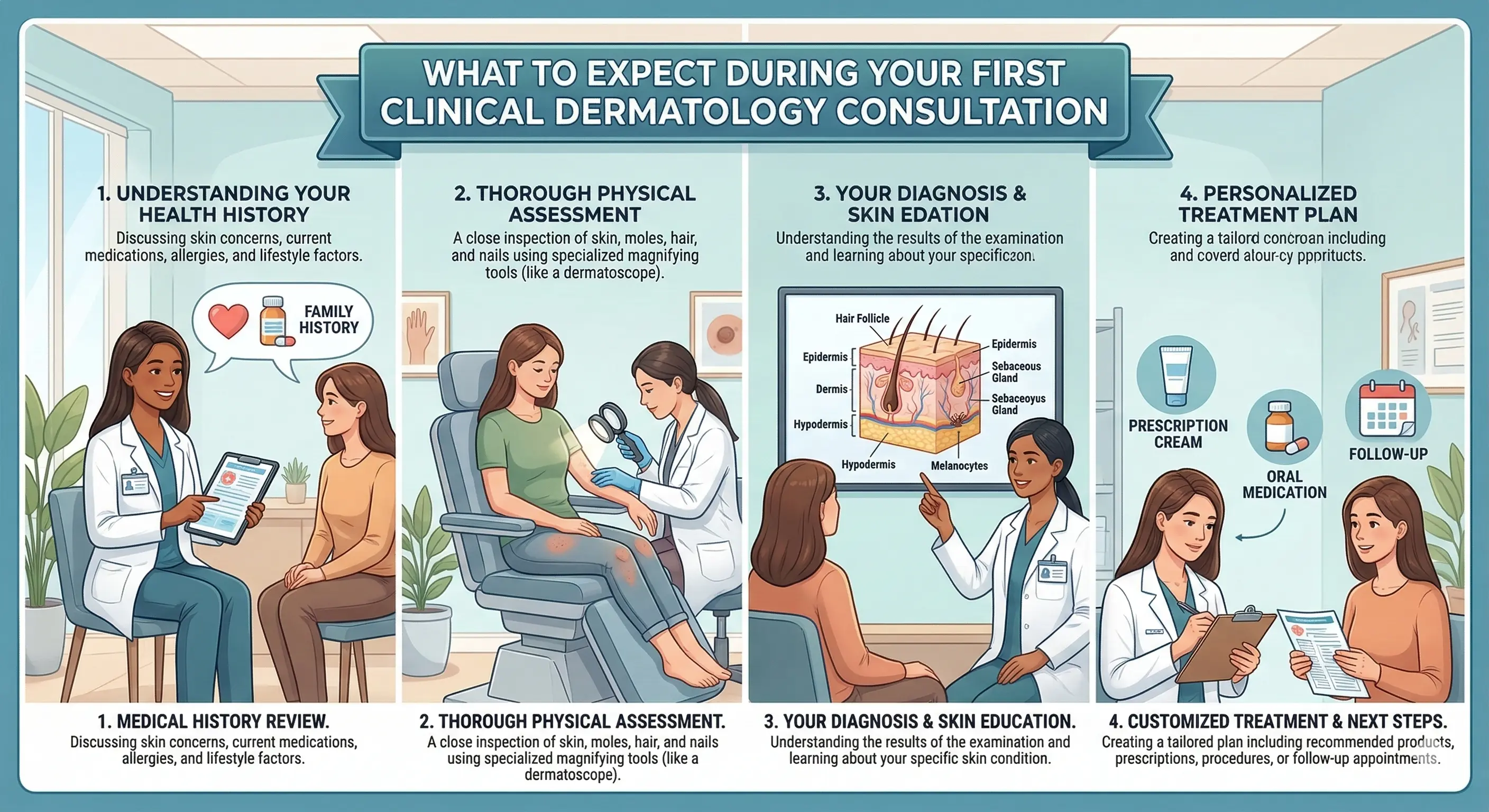
What to Expect During Your First Clinical Dermatology Consultation
Skin problems are more common than most people realize. From persistent acne and unexplained rashes to pigmentation issues and hair loss, many individuals eventually seek professional help for their skin concerns. If you are planning your first clinical dermatology consultation, it is natural to wonder what the process involves and how the dermatologist will evaluate your condition.
A clinical dermatology consultation focuses on diagnosing and treating medical skin conditions rather than cosmetic concerns alone. Dermatologists are trained to examine the skin, hair, and nails to identify underlying issues and create a treatment plan tailored to each patient.
Understanding what happens during your first visit can help you feel more comfortable, prepared, and confident about taking the next step toward better skin health and dermatological care.
Understanding the Role of Clinical Dermatology
Clinical dermatology is a specialized field of medicine that focuses on diagnosing and treating disorders related to the skin, hair, and nails. Unlike purely aesthetic treatments, clinical dermatology addresses medical conditions that may affect your overall health and quality of life.
Some common issues managed in clinical dermatology clinics include:
- Acne and acne scars
- Eczema and dermatitis
- Psoriasis
- Skin infections
- Allergic skin reactions
- Hair loss disorders
- Pigmentation disorders
- Chronic skin inflammation
Dermatologists use medical evaluations, diagnostic tests, and evidence-based treatments to identify the root cause of these problems and provide appropriate solutions.
Why a Dermatology Consultation Matters
Many people delay seeking medical advice for skin concerns, hoping the problem will resolve on its own. However, persistent skin issues may indicate underlying medical conditions that require professional evaluation.
A clinical dermatology consultation helps in:
- Identifying the cause of chronic skin conditions
- Preventing complications or worsening symptoms
- Receiving targeted dermatological treatment
- Maintaining long-term skin health
Early diagnosis often leads to more effective treatment and faster recovery.
Signs You Should Consider Seeing a Dermatologist
Not every skin issue requires medical attention, but some symptoms should not be ignored.
You may benefit from a clinical dermatology appointment if you experience:
- Persistent acne that does not respond to over-the-counter treatments
- Chronic itching or skin irritation
- Sudden hair loss or scalp problems
- Recurring skin infections
- Unusual moles or changes in existing moles
- Unexplained rashes or pigmentation changes
If these symptoms persist or worsen, consulting a dermatologist can provide clarity and proper treatment.
Preparing for Your First Clinical Dermatology Consultation
Preparation can help make your visit more productive and informative.
Before attending your dermatology consultation, consider the following:
Bring Relevant Medical Information
Provide details about your medical history, medications, allergies, and any previous treatments you have tried.
Avoid Heavy Skincare Products
Try not to apply makeup or strong skincare products before the appointment so the dermatologist can clearly examine your skin.
Make a List of Symptoms
Note when your symptoms began, how they have progressed, and whether anything seems to trigger or worsen them.
These details help the dermatologist understand your skin concerns more accurately.
Step 1: Medical History and Patient Discussion
Your consultation typically begins with a detailed discussion about your medical history.
The dermatologist may ask questions such as:
- When did your skin condition start?
- Have you noticed any triggers or patterns?
- Do you have a family history of skin diseases?
- What skincare products or medications are you currently using?
This conversation provides valuable context for diagnosing the condition and planning appropriate treatment.
Step 2: Comprehensive Skin Examination
After reviewing your medical history, the dermatologist will perform a physical skin examination.
This examination may include:
- Inspecting the affected skin area
- Checking the scalp and hair condition
- Examining nails for signs of infection or disease
- Evaluating pigmentation, texture, and lesions
Dermatologists are trained to identify subtle changes in the skin that may indicate specific medical conditions.
The goal of this step is to understand the nature and severity of the skin issue.
Step 3: Diagnostic Tests if Required
In some cases, the dermatologist may recommend additional tests to confirm the diagnosis.
Common dermatological tests include:
Skin Biopsy
A small skin sample is taken and analyzed in a laboratory to diagnose certain conditions.
Allergy Patch Testing
This test helps identify substances that may be causing allergic skin reactions.
Blood Tests
Blood tests may be recommended if the skin condition is linked to internal health factors such as hormonal imbalances or autoimmune conditions.
These tests help ensure the diagnosis is accurate and reliable.
Step 4: Understanding the Diagnosis
Once the dermatologist evaluates the examination findings and test results, they will explain the diagnosis and underlying cause of the condition.
During this discussion, patients may learn:
- The specific skin disorder they have
- Possible triggers or contributing factors
- Whether the condition is temporary or chronic
- Potential treatment options
This stage is important because understanding the condition helps patients follow the treatment plan more effectively.
Step 5: Personalized Dermatology Treatment Plan
After confirming the diagnosis, the dermatologist will suggest a treatment plan based on your skin condition and medical history.
Treatment approaches may include:
Topical Treatments
Creams, lotions, or ointments that target inflammation, infection, or dryness.
Oral Medications
Certain conditions may require oral medications to control infections, allergies, or inflammation.
Medical Dermatology Procedures
Some skin conditions benefit from advanced treatments such as:
- Phototherapy
- Chemical peels
- Laser therapy
- Cryotherapy for skin lesions
A clinical dermatology clinic typically provides guidance on the most appropriate treatment options depending on the patient’s needs.
Step 6: Guidance on Skincare and Preventive Care
In addition to medical treatment, dermatologists often provide guidance on daily skincare practices that support healthy skin.
These recommendations may include:
- Using gentle cleansers suitable for your skin type
- Applying sunscreen regularly
- Avoiding skincare products that trigger irritation
- Maintaining hydration and balanced nutrition
Preventive care plays an important role in managing chronic skin conditions and preventing flare-ups.
Step 7: Follow-Up and Ongoing Dermatological Care
Many dermatological conditions require monitoring over time.
A follow-up appointment allows the dermatologist to:
- Evaluate the effectiveness of the treatment
- Adjust medications if needed
- Monitor skin improvement
- Prevent recurrence of the condition
Regular follow-ups are particularly important for chronic conditions like psoriasis, eczema, and acne management.
Choosing a Trusted Clinical Dermatology Clinic
When seeking professional skin care, choosing a reliable clinical dermatology clinic can make a significant difference in the quality of diagnosis and treatment.
A reputable clinic typically offers:
- Experienced dermatology specialists
- Evidence-based treatment approaches
- Modern diagnostic tools
- Personalized patient care
If you are experiencing persistent skin concerns, consulting a qualified dermatologist can provide the clarity and guidance needed to manage your condition effectively.
Taking the First Step Toward Healthier Skin
Many people hesitate to schedule their first dermatology visit because they are unsure what to expect. However, most consultations are straightforward and focused on understanding the patient’s concerns.
If you have ongoing skin issues, it may be helpful to consider scheduling a clinical dermatology consultation to evaluate your symptoms and explore suitable treatment options.
Early evaluation often leads to better outcomes and improved skin health over time.
Conclusion
A first clinical dermatology consultation is an important step toward understanding and managing your skin concerns. During the visit, the dermatologist will review your medical history, perform a detailed skin examination, and recommend diagnostic tests if necessary. Based on the findings, they will develop a personalized treatment plan designed to address the root cause of the problem.
Beyond treatment, dermatologists also provide valuable guidance on skincare routines, lifestyle adjustments, and preventive care to maintain healthy skin in the long term. If you are experiencing persistent skin issues, seeking professional dermatological advice can help you move toward clearer, healthier skin with confidence.

.webp)